Homepage, Helpful Information, Study Guide

Tuesday, September 27, 2005

French Revolution - Western Civilization
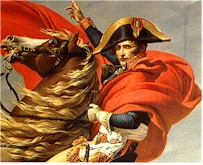


Click the linked title for a follow up site on the French Revolution.


Today's cabinet positions and members under George H.W. Bush: Today's Cabinet

Cabinet positions and members under Washington: Washington's cabinet

Tuesday, September 20, 2005

Views and Info of the Great Wall- World History II


For history of the Great Wall go to: Thinkquest

For interesting facts go to: Major Engineering Events in History

And finally, weigh in and tell me, do you think the Great Wall is visible from space? Check this source that says no way: Mythbusters

Wednesday, September 14, 2005

Western Civ II- Article/Quiz Assn. "Boswell, Rousseau, and Voltaire"

To access article, click linked title. Once on Galileo homepage go to Ebsco Host. Put in the search terms: Boswell, Rousseau, and Voltaire. You can read the article in PDF format or print it off. Tuesday Only class.. be prepared to discuss and turn in questions for a quiz grade Tuesday. Sept. 27th.

Here are the questions for the take home quiz. Answer questions thouroughly and in complete sentences. Typed/double spaced answers are preferable.

1. Who is James Boswell and how do his feelings change throughout his visits with leading figures of the Enlightenment?
2. What differences do Voltaire and Rousseau have regarding religion?
3. What is deism and what does it mean to be a deist?
4. What differences do Voltaire and Rousseau have regarding government (in general and in some cases specific examples).
5. Analyze the cartoon, "The Savage Man" based on Boswell's writings. What is he trying to represent with the main characters through the actions portrayed in the cartoon?
6. Why does Rousseau not like Voltaire?
7. What other major event is occurring by the time Rousseau and Voltaire pass away?
8. What happened with Boswell and Rousseau's maid/lover?

Tuesday, September 13, 2005

American History- Women's Holocaust Discussion Questions

Please be prepared to discuss the following questions in class 9/14.
Discussion Questions

1. Explain the economic and political causes underlying the Salem witch trials.
2. Describe the rule of law and order in Puritan society.
3. Evaluate the significance of who was accused of witchcraft and who the accusers were.
4. Brainstorm and discuss more recent events that you might label as “witch hunts.”
5. Debate the use of spectral (circumstantial) evidence and the "confessions" in the trials. What would a modern court do with such evidence and due process?
6. Discuss how the witch trials came to an end in Salem and what their consequences were. In your view, were matters resolved fairly?
7. Why is the article called 'The Women's Holocaust' and what does it reflect about views of women at the close of the 17th century?

World History II- Notes for Ch. 19


World Civ II- Ch. 19/East Asia in the Late Traditional Era

INSTRUCTIONS FOR THE NEXT TWO CLASSES:
1.Read Chapter
2.Read Kangas quote. -Matthew Kangas, a writer for “Ceramics Monthly” states in an article, “If there is one art form that has done more to traverse cultural, geological, and historical borders, it is surely Porcelain,” (Volume 48, Issue 10).
3.Read the TWO articles “The Kiln of Civilisation,” and “The Secret History of Porcelain.” Then read p. 530 about why the west and not the east rose to industrial greatness.
4. Visit SIX interest sites posted on blog below regarding China, Opium Wars, Tai' P’ing rebellion, and Japan.
5. Answer questions posted on blog and be prepared to discuss lecture, chapter, websites, and questions on Tuesday September 20th.
6. Turn in questions and answers (preferably typed) on Tuesday September 20th.


QUIZ QUESTIONS:
1. WHAT FACTORS LED TO ECONOMIC GROWTH IN LATE TRADITIONAL CHINA?
2. MING-QING FOREIGN RELATIONS SET THE STAGE FOR CHINA'S NINETEENTH-CENTURY ENCOUNTER WITH THE WEST. HOW WOULD YOU DESCRIBE THE SETTING?
3. IN WHAT SENSE WAS CHINESE CULTURE A 'TECHNOLOGY'USED BY JAPAN, KOREA, AND VIETNAM FOR STATE BUILDING? WHY WERE THE RESULTS IN EACH COUNTRY SO DIFFERENT?
4. HOW DID PORCELAIN SHAPE A GLOBAL MARKET?
5. WHY DID THE EAST LOSE GROUND TO THE EUROPEAN/WEST AS CENTER AND LEADER OF WORLD TRADE POWER?
6. DESCRIBE THE SIGNIFICANCE OF THE OPIUM WARS (INCLUDE CAUSES, SHORT/LONG TERM CONSEQUENCES).
7. HOW IS RELIGION INVOLVED IN TAIPING REBELLION AND WHAT DOES THIS REFLECT ABOUT SOCIETY?

(ALSO CONSIDER ISSUES INVOLVED IN FOOT-BINDING AND WOMEN WITHIN THE PATRIARCHAL CHINESE SYSTEM)

<<<>>>


China
I. Last Chinese Dynasties: Ming Dynasty 1368-1644, Qing Dynasty (1644-1912)
A. Population increase: 90 million 1368, 410 million mid 19th century
B. Rice and agricultural technology makes rice big ticket product (40% of land used for rice)
C. Why did population grow so rapidly.. read questions p. 532
D. Third Commercial Revolution 1500-1800
1. China most highly commercialized non-industrialized country in the world
2. Much trade of silver, copper went to China and from China went porcelain and silk
3. Still production and economy was regional not national, and putting out system was as close to factories as China had
4. Women did not largely participate in the commercial revolution, and footbinding p. 533 which started in Song Dynasty grew during Ming and to middle class/commoners during Qing. Unmarriageable if “large” normal feet.
E. Confucianism: ethical/social system rather than religious
1. Partriarchal- (Father, husband, son over women), education, civil service, family as socio-political units with obligations and duties
2. tests given to potential civil servants, jobs working for the government a new concept
F. Political system: Massive population increase and the commercial revolution did not produce a bourgeois (middle class) revolution. Nor were major reforms and political forms restructured. The government was only made stronger, this “perfected government” was caused by the “spread of education, better government finances, more competent officials, and a larger gentry class with expanded role in local society,” (534).
1. Emperor stronger than ever, despotic power over courts
2. Forbidden palace rebuilt and moved to Beijing (like Kremlin in Russia)
3. Bureaucracy – meritocracy (under Confucianism)
4. Manchu rule at the end of the Ming Dynasty p. 537, preferably to Chinese rebels “The mouse that swallowed the elephant,” (540). This became the Qing Dynasty (only the second time the Chinese were ruled by foreigners.
5. Government also produced encyclopedias, dictionary (1615 c.e.) and reduced the number of characters from 540 to 214
6. The Great Wall was ancient, but wall of today either built or repaired during Ming Dynasty.
7. Chinese during Ming Dynasty built world’s largest naval fleet which performed diplomatic voyages. After the last in 1433 none were attempted again.
8. Internal division led to downfall of Ming Dynasty (weak leaders, groups wanted their men in power, Manchu pressure).
9. Under the Qing Dynasty a period of peace accompanied the first three rulers. Porcelain continued to thrive and expand as part of Western popular culture.
10. There was also much expansion of public works and taxes were eased. Commerce and international trade ushered in revival of arts and learning.. hence the diversification of porcelain, painting, encyclopedias, novels.
11. Qianglong- was successful leader who expanded borders of China to its greatest extent. Yet, popular uprisings began to undermine the dynasty’s power. Secret societies led these such as the Society of the White Lotus (1775 c.e.) and Society of Heavan’s Law.
12. Tiai P’ing Rebellion also famous and partly religious, combining Christianity with Chinese religion.
13. Internal divisions also affected by the westernization of Japan.
G. Foreign Relations- Ming Dynasty and Quing Dynasty imperialistic- Chinese borders expanded- European influence grows
1. Now Europeans are exploring/colonizing and New World had been discovered during Ming Dynasty.
2. Some missionaries sent, and they attached Buddhism as superstitious and Confucianism as secular and nonantagonistic to Christianity. Jesuits, Franciscans and Dominicans came.
3. Other Europeans came to trade- Joint stock companies start up such as British East India Company created its own triangular trade: China India and Britain (allows Britons to drink tea and wear silk). Capitalism and private enterprise earn a select few a great deal of wealth.
4. During Qing Dynasty European influence more greatly felt. Great Britain continued to import silk, tea, and porcelain; but nothing to export to China until Opium.
a. This greatly harmed China because of opium addition, opium production, and eventually led to Opium Wars in 1842 c.e. which occurred as a result of the ban of the Opium Trade.
b. At the war’s end, China’s payment was to open Hong Kong to the British, first as an open port, after 1857 and more fighting, the British gained Hong Kong as a colony- many Chinese felt making the whole a British colony.
H. Culture- books and novels, many are pornographic, brief description given on p. 545
1. The Golden Lotus
2. Dream of the Red Chamber
3. The Scholars

II. Japan- Warring States (1467-1600)
A. Military technology/weapons change p. 547 (musket, mandatory service)
B. Samurai out, infantry in
C. Trade
1. Some trade with China, Europeans arrive
2. Christianity has better success in Japan- maybe because it was seen as a new Buddhist sect – cosmic Buddha similar to Christian God
III. Japan- 1536-1868
A. Hideyoshi’s Rule- see blog link
B. Tokugawa Rule- see blog link

Monday, September 12, 2005

China, Japan, and Korea sites- World History II


For more information on the Ming Dynasty.


For more information on the Qing Dynasty.


For more information on Hideyoshi's Rule.


For more information on the Tokugawa and Meiji Rule.

Also check here: http://www.fsmitha.com/h3/h48japan.htm

To understand the significance of the Opium Wars between Eastern and Western powers go to: http://www.wsu.edu:8080/~dee/CHING/OPIUM.HTM

For more insight on the T'ai Ping Rebellion go to: http://www.wsu.edu:8080/~dee/CHING/TAIPING.HTM

Wednesday, September 07, 2005

Enlightenment and The Age of Reason- World and Western Civ


Click on the linked title to view the informative webpage designed by Dr. Richard Hooker, a professor at Washington State University. Please read through all sections on the Enlightenment as a study guide as well as a reference for your text reading. Many of the terms/concepts/people he has highlighted are also important for you to know in this class. Pictured in this post is a famous painting from the Renaissance/Enlightenment with which you may be familiar. The painter is Jan Vermeer (1632-1675). Do you know the name of the painting? Click here to read more about his work and art during the 17th-18th centuries.

American History- Salem Witch Trial Resources


Click on the linked title to go to a great site on Salem and the witch hunt.

Tuesday, September 06, 2005

American History Assignment

Please read the following article entitled "Women's Holocaust" for class September the 14th. The article can be found by accessing Galileo.
Once on Ebsco Host type in search terms: women's holocaust AND salem witch trials. This will take you to the article which you can view in either html or pdf format. You are not required to print it, but you do need to read it by next week. Email me or post a comment if you have any problems.

Just for the knowing

For the most eerie- just down right disturbing- take on what has happened in New Orleans, read this National Geographic article PUBLISHED IN 2004 OVER A YEAR AGO. It will blow your mind. The date of the article is in the top right hand pull down menu, it was brought up from the magazine's online archive.

Go to:

http://www3.nationalgeographic.com/ngm/0410/feature5/index.html

Quiz- Primary Source

For those of you who are checking ahead, you may glance at your primary source for this week's quiz (linked title). I will choose two extracts from Equiano's book: THE INTERESTING NARRATIVE OF THE LIFE OF OLAUDAH EQUIANO (1789).

World History II-Ch. 17 Enrichment

BBC website with audio- regions of Africa broken down- go to:
www.bbc.co.uk/worldservice/africa/features/storyofafrica/index.shtml

Modern Map of African Nations- click on map to enlarge- go to:

http://www.rebirth.co.za/images/Map_of_Africa.jpg

Thursday, September 01, 2005

The Bubonic Plague- Western Civilization and World History

Click the linked title and go through the entire site. Included are pictures/diagrams of what "buboes" looked like, explanations of how it was transmitted, explanations by victims of why the plague occurred, and how the plague led to the Renaissance. For exam purposes, pay particular attention to the pages dedicated to the plague's effect on the economy, religion, art/music, and the overall effect on Europe (which clarifies how the Black Death led to the Renaissance and a restructuring of the economy).