Homepage, Helpful Information, Study Guide

Tuesday, May 22, 2007

Extra Credit Opportunity

For 10 points, view and analyze one of the following movies. You must write a 2-3 page summary and analysis but be sure to link it to class and to larger themes and issues. You are not guaranteed 10 points, the analysis will be graded on a scale of 10 so quality counts. Due by Friday.


Gone with the Wind (1939)

To portray the thinking of the South during the Civil War period, this Clark Gable/Vivian Leigh classic has to be on anyone�s historical film list. Give the film credit for holding up over the years�it still packs people into theaters whenever it gets re-released to the big screen (especially in the South). Sure it�s smaltzy in parts by today�s standards, but Gone with the Wind remains a lot of fun. For historical purposes, the first half of the film stands up much better than the second half, which mostly emphasizes the love story.

Glory (1988)

This movie gives insight into the racism in the North as well as the efforts of African American troops in the war. Larger issues include class, religion, race, morality, and strength of character. The General in charge, along with several of the members of the regiment undergo life changing experiences turning them into true heroes.

Gangs of New York (2002)

As waves of immigrants swell the population of New York, lawlessness and corruption thrive in Manhattan's Five Points section. After years of incarceration, young Irish immigrant Amsterdam Vallon returns seeking revenge against the rival gang leader who killed his father. But Amsterdam's personal vendetta becomes part of the gang warfare that erupts as he and his fellow Irishmen fight to carve a place for themselves in their newly adopted homeland. Larger themes include race, gender, class, ethnicity, urbanization, and the Civil War. This movie has it all.

Sands of Iwo Jima (1949)

A John Wayne classic in which he was Oscar nominated for his portrayal of Sgt. Stryker. The movie shows the marines at their finest, island hopping through the Pacific to assault Iwo Jima.

Hamburger Hill (1987)

A true story of the 101st Airborne's fight to gain a hill in Vietnam. This movie is considered to be one of the best movies about the war in Vietnam.

Tora! Tora! Tora! (1970)

A classic World War II movie focusing on the war in the Pacific. It is unique in that it shows both perspectives (Japanese and American) of the war.

Little Big Man (1970)

Arthur Penn creates a humorous account of the Indian Wars on the Great Plains of 19th century America, but with a serious undertone. Dustin Hofmann�s character serves as a narrator who knows the ways of both the Indians and settlers, but the brutal re-creation of the Sand Creek massacre and a later bloody slaughter of women and children confirms who the true human beings are.

Who can forget Old Lodge Skin�s observation? �. . . But the white man, they believe EVERYTHING is dead. Stone, earth, animals. And people! Even their own people! If things keep trying to live, white man will rub them out. That is the difference.�

A surprising choice perhaps, but I really do enjoy Arthur Penn's humorous treatment of the old West here. It's one of the first sensitive treatments of Native Americans that I can recall, at least in a major release. Chief Dan George is priceless as a wise and very human elder. Despite the liberties that the film takes with history, this film did open my eyes more to the injustices suffered by the native people, and inspired me to read more background about that historical period, which led me to live on the Navajo reservation for over 20 years.


Grapes of Wrath (1940)

John Ford�s classic rendition of Steinbeck�s novel captures the spirit of the Great Depression and the plight of poor folks of that time better than any film I can think of. The film portrays the courageous Joad family in pursuit of the American dream in the face of adversity�two especially memorable moments occur with Tom�s farewell and Ma Joad�s �we are the people� speech.
Some of the camera shots even look like the published photos coming out of the Dust Bowl from the 1930�s.


Patton (1970)

George C. Scott becomes George S. Patton in this epic war film. You can learn a lot of WWII history through the film (at least the U.S. involvement on the European front), but even better � you can gain insights into the complex and controversial poet warrior himself. For people who wonder whether the film is for hawks or doves, the answer is �yes.� Above all, Patton remains a character study.


The Right Stuff (1983)

There are a number of films that you can use to show the Cold War and demonstrate the paranoia of the 1950�s, but why not focus on one of the seminal events of the period�the launch of sputnik, which triggered the Space Race. This film is great for watching whenever you need a lift about what is right and good about the American spirit. It�s an incredibly well written and edited film about a turning point in our history when we began to earnestly reach for the stars.

Good Morning Vietnam (1987)

A new Disc Jockey is shipped from Crete to Vietnam to bring humor to Armed Forces Radio. He turns the studio on it's ear and becomes wildly popular with the troops but runs afoul of the middle management who think he isn't G.I. enough. While he is off the air, he tries to meet Vietnamese especially girls, and begins to have brushes with the real war that never appears on the radio.

Platoon (1986)

Chris Taylor (Charlie Sheen) is a young, naive American who gives up college and volunteers for combat in Vietnam. Upon arrival, he quickly discovers that his presence is quite nonessential, and is considered insignificant to the other soldiers, as he has not fought for as long as the rest of them and felt the effects of combat. Chris has two commanding officers, the ill-tempered and indestructible Staff Sergeant Robert Barnes (Tom Berenger) and the more pleasant and cooperative Sergeant Elias Grodin (Willem Dafoe). A line is drawn between the two officers and a number of men in the platoon when an illegal killing occurs during a village raid. As the war continues, Chris himself draws towards psychological meltdown. And as he struggles for survival, he soon realizes he is fighting two battles, the conflict with the enemy and the conflict between the men within his platoon.


Woodstock (1970)

The 1960�s are a turbulent turning point in American history that must be represented by film. Even though works like Easy Rider and The Graduate capture the spirit of the period, Woodstock has to rank as a singular film to represent the era. This documentary is a well-done film that captures the overall flavor of the 1969 festival, complete with local townspeople reactions and skinny-dipping. There are a number remarkable concert performances preserved forever in our memories-Richie Havens, Joan Baez in the night rain, Santana, Sly and the Family Stone. Just the footage of Hendrix would be worth the price of the video!

Woodstock truly IS a piece of history that defines a moment. Sure, there were a half a million people who attended the rain soaked, muddy event for three days of Peace and Music in upstate New York, but Woodstock enabled the event to live on afterwards and grow into legendary status. What could have been a small footnote in history has been expanded to mark the event with more significance than it may have originally had, and this is largely due to this documentary.


Apocalypse Now! (1979)

Francis Ford Coppola has constructed the definitive Vietnam movie even though Apocalypse Now isn�t just about the war. Coppola�s film explores the dark regions of the heart and soul in a well-conceived metaphorical rendition of Conrad�s novel that we see through Captain Willard�s eyes as he pursues Kurtz and to �terminate� his command �with extreme prejudice!�

There are so many memorable scenes here � skiing on the river, surfing in the midst of chaotic shelling, the massacre in the boat, the bridge scene at night, the Wagnerian operatic huey attack on the village, and others. Who will ever forget Robert Duvall�s statement, �I love the smell of napalm in the morning . . . Smelled like. . . victory.�

While other films about the Vietnam War will become film footnotes in history, Apocalypse Now is destined to be viewed and re-examined for many decades to come. Vietnam may provide the subject matter, but this landmark film reaches far beyond its Southeast Asian boundaries into the universal.

Note: For a more straight-forward accounting for the Vietnam War you may prefer Oliver Stone's autobiographical Platoon, but Stone cannot resist preaching to us in any of his films.


All the President�s Men (1976)

Why cover Watergate when there are so many other choices available? For one thing, Watergate must be regarded as an important turning point in American history�never again will Americans naively regard their political leaders as highly. So, the scandal in a sense destroyed much of our innocence, and pointed out the value of freedom of the press. Another reason is that Pakula�s film is an intelligent and finely crafted work. Students will need to take notes to keep up with all the Watergate figures�but so did those of us who attempted to follow the situation as it was happening. Never before did we become as familiar with the White House staff.

American History X (1998)

This film brings new light to present day fear, hatred, and ignorance. It is quite violent and graphic. Derek Vinyard (Edward Norton) returns from prison to find his younger brother, Danny (Edward Furlong), caught in the same web of racism and hatred that landed him in prison. After Derek's father is killed in the line of duty by a minority, Derek's view of mankind is altered, but while in prison, he discovers that there is good and bad in every race. The task before him now is to convince Danny of his newfound enlightenment. This movie will find yourself questioning your own opinions and bias and what shapes them. Great movie for discussion.

Friday, May 18, 2007

2112 Online Lecture Notes


Please print off a copy of the notes found at the following sites. We will use them as to complement your text while discussing the 1920s and early 1930s.

The Politics of Frustration: The 1920s


The Politics of Prohibition: The 1920s

Crashing Hopes: The Great Depresion

2112 Final Exam Study Guide

Identifications

Nationalism, Imperialism, Militarism
Alliances and Assassination of Franz Ferdinand
Otto Von Bismarck
U.S. isolationism and events that pull us into WWI
Technology and industrialization in warfare
Trench warfare and stalemate on the West
Bolshevik Revolution
Mexican Revolution
WWI Propaganda and First Amendment challenges (incorporate themes of loyalty, patriotism, etc.)
U.S. War Heroes
African Americans and Women during wartime and after wartime
Prohibition and the 18th Amendment
Fourteen Points v. Treaty of Versailles
Harding’s “Return to Normalcy”, Cultural Fundamentalism, Religious Fundamentalism
Effects of new forms of communication, entertainment, transportation on American culture and economy
Henry Ford and his contributions
Ideology of Consumption, Consumerism, Materialism
New industries due to industrial revolution and mass production
Red Scare, Sacco and Vanzetti, and Palmer Raids
New Klan
Scopes Monkey Trial
Great Migration
NAACP, UNIA, W.E.B. Dubois, Marcus Garvey, Booker T. Washington
Jazz Age and the Harlem Renaissance
Harding, Coolidge (Silent Cal), and Hoover policies toward big business and govt. regulation and intervention
Buying on Margin, Speculation
Stock Market Crash
Hoovervilles, Bonus Army castastrophe, Dust Bowl, “Forgotten” Man
Vicious cycle of lowered production, consumption, labor
International Depression
First 100 Days (include organizations set up during this time, e.g. CCC, WPA, etc) and FDR’s New Deal
Fireside Chats
AAA, S.Ct., Court Packing, Checks and Balances
Movies and music
NRA and nationalism (and perverted/distorted meanings of nationalism)
Anti-New Deal, Father Coughlin, Huey Long
Legacy of the New Deal and End of the Great Depression
Rise to Power- Hitler, Mussolini, Stalin, FDR, Franco, Tojo
Defiance of Versailles, Anti-Semitism, Invasion of Poland, Blitzkreig
New Alliances (WWI --> WWII)
Pearl Harbor
WWII propaganda, nationalism, and gender
WWII and race (at home and abroad)
Island Hopping
Four Fronts and Turning Point Battles
Hitler and Blitzkreig
WWII technology and weapons
Executive Order 9066 and Japanese Internment Camps
Holocaust and perverted nationalism
Manhatten Project
FDR and the Yalta Conference
Atomic bomb decision and consequences
Cold War origins Post WWII
Truman's Civil War Stance
Truman's Reelection
Chinese Revolution
The Korean Conflict
General MacArthur and Korea
McCarthyism
Eisenhower as president
Conformist 50s
The Boob Tube
Suburbian Values
White Flight
Ed Sullivan Show
Baby Boom
Interstate System
Beatniks
Brown v. Board of Education
Montgomery Bus Boycott and MLK Jr.
Little Rock Nine
Peaceful Coexistence
Bay of Pigs and Cuban Missile Crisis
JFK/Nixon Debate
New Frontier and JFK's Civil War Stance
March on Washington
Berlin Airlift and the Iron Curtain
Robert S. MacNamara
Domino Theory
Lyndon Baines Johnson and Civil Rights (Civil Rights Act of 1964, Voting Rights Act of 1965)
Lyndon Baines Johnson and the Great Society
Lyndon Baines Johnson and Vietnam
Black Separatism, Malcolm X, and the Black Panthers
New Left (SDS), New Right (YAF), and the Demonstration Generation
Counter Culture, Music, Drugs, and Lifestyle
Haight-Asbury Street
Woodstock
Nixon, Vietnam, and Vietnamizatioin
Watergate and Nixon's Resignation
Gerald Ford's Presidency
Jimmy Carter and the Middle East (including Olympic Boycott)
Reagan Revolution and Reaganomics
Defense and Foreign Policy: Star Wars, Salt I, Salt II, Iran Contra
Reagan and Latin America
Reagan and the Cold War
Bush and Desert Storm
Clinton Presidency
Cyber-America
9/11, Global Terrorism
Globalization, Neo-Colonialism, Transnationalism


1. Explain how the the Treaty of Versailles, the Great Depression and the instability of Europe and the U.S. led to WWII.

2. Describe the multiple facets of WWII. Include fronts, strategies, turning points, and actions toward peoples considered "inferior."

3. Discuss certain ideas and practices employed during WWII (and justified by nationalism) that affected gender and race both during and after the war. What new movements and/or reactions arose as a result and why?

4. Analyze why post WWII created the superpowers of the US and Soviet Union?

5. What were the major events and countries involved in the Cold War struggle? What do these events represent about the nature of power and nationalism?

6. Analyze 1950s culture in America. Consider issues of technology, consumer culture, economics, demographics, and the role of government.

7. How did the Cold War affect domestic and foreign policy and events in the 1950s and 1960s.

8. Explain the failures and successes of the Civil Rights Movement. Describe the approaches and methodologies used by the SNCC and SCLC.

9. Describe the legacies of presidents from Johnson to Reagan. Include the domestic, foreign, and economic policies and results.

10. Was the world we live in today created out of post-WWII industrial capitalism? Explain. Then consider the following statement: How does America continue to subscribe to contradictions found within American Exceptionalism? Include concepts such as globalization, neo-colonialism, and transnationalism.

11. How and why did World War One start. Explain the emergence of technology, imperialism, nationalism, militarism, alliances, and the modern nation state.

2112 Political Compass Test

2112 WWI Resources


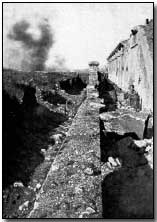
Check out this incredible site with a multitude of resources and special topics on WWI. Included are propaganda posters, songs, pictures, diaries, newspapers, and secondary accounts of important battles, generals, heroes, and the war's timeline. View some of the propaganda from a World History perspective not just an American perspective. The picture above is from the Battle of Verdun.

The Site is linked to the entry title.

Wednesday, May 16, 2007

Chapter Analysis Rubric

Here is the exact rubric I will use in grading your chapter/article analysis.


_______ /10 1. What is the specific topic of the book or article? What overall purpose does it seem to have? For what readership is it written?

_______ /10 2. Does the author state an explicit thesis? Does he or she noticeably have an axe to grind? What is the purpose?

_______ /10 3. What exactly does the work contribute to the overall topic of your course? What general problems and concepts in your discipline and course does it engage?

_______ /10 4. What kinds of material does the work present? What types of sources and evidence is used?

_______ /15 5. Does the material/evidence used support the overall arguments? How so? Or how not? Explain and give examples.

_______ /10 6. Are there alternative ways of arguing from the same material? Does the author show awareness of them? Is there bias?

_______/10 7. What theoretical issues and topics for further discussion does the work raise? In other words, how does this fit into the bigger historical context?

_______ /10 8. What are your own reactions and considered opinions regarding the work? Do you “buy” the author’s argument(s)? What are the articles strengths and weaknesses?

_______ /15 9. Analysis writing style: proper punctuation, spelling, capitalization, grammar, sentence and paragraph structure


_______/100 = TOTAL GRADE

Sunday, May 13, 2007

2112 Maymester Midterm Study Guide

Identifications:
Remember to describe the term/concept but also include its importance and historical significance.

1. American Exceptionalism
2. Lincoln’s Assassination
3. Lincoln’s 10% plan
4. Radical Republicans, Thaddeus Stevens, and the Wade Davis Bill
5. Andrew Johnson
6. Freedmen’s Bureau and O.O. Howard
7. Black Codes
8. Carpetbaggers and Scalawags
9. 13th Amendment
10. 14th Amendment
11. 15th Amendment
12. Reconstruction Act of 1867
13. Impeachment of Andrew Johnson
14. African Americans in a Reconstruction Era Government
15. The Grant Administration
16. Panic of 1873
17. Election of 1872 and Horace Greeley
18. Election of 1876 and Rutherford B. Hayes
19. Compromise of 1877 and the legacy of Reconstruction
20. Gilded Age
21. Political Machines, Government, and Immigration
22. Boss Tweed and Tammany Hall
23. Uncharismatic presidents
24. Kickbacks and Sandbagging
25. Immigrant groups
26. Yankee Ingenuity and Inventions
27. Telephone and Hello Girls
28. U.S. takes the Industrial lead
29. Thomas Edison
30. Railroad Revolution, time zones, gauges, laborers, Transcontinental line
31. Pirates of the Rails (Vanderbilt, Gould)
32. Carnegie and U.S. Steel
33. J.P. Morgan and banking
34. John D. Rockefeller and Standard Oil
35. Corporations, Monopolies, Horizontal/Vertical Integration, and the law
36. Big Business: Promotion of Capitalism or Threat to Democracy?
37. Big Businessmen and Distribution of Wealth
38. Grangers and Granger Laws
39. I.C.C. and Sherman Anti-Trust Act
40. Haymarket Square Riot
41. Social Darwinism, Gospel of Wealth, and Gospel of Success
42. Horatio Alger
43. Philanthropy and Conspicuous Consumption
44. Women and Children in the work force
45. Urbanization
46. Working Conditions
47. Labor Organization: AFL, Molly Maguires, Knights of Labor
48. Strikes and violence
49. Industrialization and Immigration
50. Chinese Exclusion Act
51. Melting Pot or Tossed Salad effect
52. Public Transportation
53. Jane Addams, the Hull House, and Settlement Houses
54. Louis Sullivan, Frank Lloyd Wright, and skyscrapers
55. Brooklyn Bridge- Construction, Symbolism, and Practical realities
56. Evils of the City: Health, Sanitation, Vice, and Crime
57. Dumbbell Tenements
58. Destruction of Indian culture, livestock and the end of the Open Plains
59. Custer’s Last Stand and the Battle of Little Big Horn
60. Geronimo
61. Century of Dishonor
62. Dawes Severalty Act (1887) Carlisle School, and effect of assimilation
63. Battle of Would Knee, Chief Joseph, and the end of Indian Resistance
64. The Wild Wild West- myths, heroes, and mining
65. Hard Times for farmers
66. The money issue: Goldbugs, Silverites, and Greenbacks
67. The Populist Party and hopes for political reform
68. William Jennings Bryan and “The Cross of Gold”
69. Imperialism
70. Progressive Movement
71. Imperialist and Anti-Imperialist arguments
72. Seward’s Ice Box
73. Spanish American War
74. Teddy Roosevelt and the Rough Riders
75. Cuba and the Platt Amendment
76. Yellow Journalism
77. Hawaii, Queen Lily, Sanford B. Dole, and annexation
78. Philippine Insurrection
79. Policies and event in China
80. Acquisition of the canal zone, and building of the Panama Canal
81. Big Stick Diplomacy
82. Mass entertainment, sports, and new issues of health and hygiene
83. Participants of Progressive America and causes of the reform movement
84. Government involvement, public awareness, media attention of exploitative practices and unacceptable conditions
85. Muckrakers (Riis, Sinclair, Tarbell, etc.)
86. The Jungle
87. Bob La Follette
88. Labor Unions and the Wobblies
89. Eugene Debs for president
90. Women’s causes and the Suffragette movement
91. Teddy the Trustbuster? Presidency of Teddy Roosevelt

Possible Discussion Questions:

The following are possible discussion questions for the first exam in American History II. Remember that a five paragraph response is not mandatory, but more than one paragraph may be needed to fully answer the question. Complete sentences, capitalization, and punctuation are a must. Also remember to answer the question using specific evidence to back up your overall answer. Good sources for specific information/evidence can be found in your text, your notes, and the identification list.

1. Was reconstruction a success or a failure? Use specific evidence to back up your answer.

2. How does the Gilded Age reflect the contradictions represented by the concept of American Exceptionalism?

3. Describe changes that the Industrial Revolution and immigration brought to Northern urban centers.

4. Explain U.S. military/political policy toward native americans (1865-1900) and the results of such policies on Native Americans.

5. Why are the multi-millionaires and political bosses more well known than our presidents from Johnson to McKinley?

6. How did big businessmen create monopolies? Give examples of actual monopolies to explain your answer?

7. Compare life for former slaves 1865-1877 and compare it with post Reconstruction.

8. How did technology and transportation change American life at the turn of the century? How did it affect farmers specifically?

9. Analyze the myth and reality of the Wild Wild West.

10. What led to American imperialism and what factors were involved in the creation of an American "empire" ?

11. Explain the goals and outcomes of the Progressive movement.

12. Analyze the changing role of journalism. Include both positive and negative influences on society based on overall nonexistent standards of reliability as well as investigative journalism. Give specific examples to support your answer.

13. Explain the roles of Roosevelt, Taft, and Wilson in the Progressive movement.

Thursday, May 10, 2007

2112 Jacob Riis


Jacob Riis's book How the Other Half Lives gives present and past audiences a glimpse into the world of working class realities as America urbanized and industrialized in the late 19th and early 20th century. Try to place his primary source work into the historical context of the Gilded/Progressive Era. To look at the contents of the source (his book) go to:

http://www.authentichistory.com/postcivilwar/riis/contents.html


It is worth a look, and you should explore a couple of chapters. They are short and descriptive. Click on Contents and then select chapters that sounds intriguing. His writings serve as an interesting look at urban conditions, industrialization, and the role of media/print journalism.

In addition, this site also has pictures and illustrations embedded in the page so that you can see the images that correlate with each chapter. This is one of the few sites whereby you can read and see the images- as well as double click on the image to see it larger and in full view.

Wednesday, May 09, 2007

2112 Primary Source

http://www.eyewitnesstohistory.com/pfbrooklynbridge.htm

The above is the link to your primary source for your primary source analysis due Friday by email by 5 p.m. Remember your analysis should be typed, double-spaced, Times New Roman, 1 inch margins, and 2-3 pages.

Primary Source Questions

• Who created the source and why? Was it created through a spur-of-the-moment act, a routine transaction, or a thoughtful, deliberate process?
• Did the recorder have firsthand knowledge of the event? Or, did the recorder report what others saw and heard?
• Was the recorder a neutral party, or did the creator have opinions or interests that might have influenced what was recorded?
• Did the recorder produce the source for personal use, for one or more individuals, or for a large audience?
• Was the source meant to be public or private?
• What are the major points of interest?
• Did the recorder wish to inform or persuade others? (Check the words in the source. The words may tell you whether the recorder was trying to be objective or persuasive.) Did the recorder have reasons to be honest or dishonest?
• Can you summarize or encapsulate the source in 3 sentences without leaving out major points of interest?
• Was the information recorded during the event, immediately after the event, or after some lapse of time? How large a lapse of time?
• Why is this source important, and what larger themes does it reflect?

Friday, April 27, 2007

1112 Study Guide

Identifications:

Motives of Imperialism
Colonizer v. Colonized
Civilizing Mission/White Man's Burden
Imperialism trends (geography)
India/Jewel of the British Empire
Sepoy Rebellion
Imperialism in Africa
Imperialism in South Pacific
U.S. Imperialism
Scientific Racism
Construction of the Panama and Suez Canals
Nationalism
Militarism
Factors leading to WWI
Assassination of Archduke Franz Ferdinand
Alliance systems
Industrial Warfare and New Weapons
Western Front and Trench Warfare
U.S. involvement in WWI
Zimmerman Note
Lusitania
Bolshevik Revolution
Wilson's Fourteen Points
Treaty of Versailles
War Debt Cycle
Speculation
Buying on Margin
Stock Market Crash and Global Depression
Rise of Adolf Hitler and Nazism
Benito Mussolini and Fascism
Joseph Stalin and Russian Communism
FDR and the New Deal
Indian Independence and Ghandi
Chinese Nationalism and Mao Zedong
African Nationalism and Independence
Good Neighbor Policy and Teddy Roosevelt
Italian and German Aggression
Defiance of Treaty of Versailles
Blitzkreig
Battle of Stalingrad
Alliances in WWII
D-Day
North African Front
War in the Pacific
Island Hopping
Hiroshima and Nagasaki
Stages of the Holocaust
The Big Four, Peace Treaty, Seeds of Cold War
United Nations
Creation of Israel state
Cold War and Korea
Cold War and Vietnam
Cold War and Cuba (Fidel Castro, Bay of Pigs, Cuban Missile Crisis)
Peaceful Coexistence
Nikita Khrushchev
Gorbachev, end of the Cold War, Collapse of Soviet Union
Iranian Revolution
Latin American Dictators, Reform, and Socialism
Aparteid
WTO
Globalization
Transnationalism
Postcolonialism
Neocolonialism
Global Terrorism
Gender in late 20th century

Possible Discussion Questions:

1. In what ways was WWI different from any war before it (consider new ideologies and industrial developments)?

2. Explain how the Russian revolution affected the U.S. and Europe from 1917-1989? Begin by explaining the basic changes of government rule created by the revolution.

3. Was the Treaty of Versailles "a peace to end all peace." Defend your answer.

4. Describe the multiple facets of WWII. Include fronts, strategies, turning points, and German attitudes toward peoples considered inferior.

5. How was Hitler able to rise to power, test his power, and expand his power from the late 1920s-1941?

6. Analyze why post WWII created the superpowers of the US and Soviet Union?

7. What were the major events and countries involved in the Cold War struggle? What do these events represent about the nature of power and nationalism?

8. Explain Globalization, Transnationalism, Post-Colonialism, and Neo-Colonialism in terms of power and dominance.

9. Analyze independence movements in India, African nations, and East Asia.

Thursday, April 26, 2007

1121 Study Guide

Identifications:

Renaissance
humanism
Petrarch
Poggio Bracciolini
Florence: Capital of the Renaissance
Realism/Perspective
Renaissance Art
Jan Van Eyck
Raphael's School of Athens Painting
Leonardo Da Vinci
Michelangelo
Donatello
Venice during the Renaissance
Sandro Botticelli
Ducale Palace (Venice)
Milan during the Renaissance
Medici Family
Rome during the Renaissance
Giotto di Bondone
William Shakespeare
Machiavellian Principles
Absolute Power in Europe
Martin Luther
95 Theses
Indulgences
Protestant Reformation
Christian Humanism
Erasmus
Thomas More
John Calvin
Presbyters
Anabaptists
Unitarians
Saint Francis of Assisi
Ignatius of Loyola
Catholic Counter Reformation
Jesuits
Spanish Inquisition
New Military Strategies/Weapons
Henry VIII
Elizabeth I
Louis XIV
Oliver Cromwell
Peter the Great
Frederick II the Great
Maria Theresa
Catherine II the Great
Seven Years War
Palace of Versailles
Prince Henry's School of Navigation
Spain/Portugal and Exploration
Conquistadors
Christopher Columbus
Columbian Exchange
Jamestown
Plymouth Rock/Pilgrims
Mass. Bay/Puritans
New England
New Netherlands
New France
New Ship Technology
Causes of Exploration
Consequences of Exploration
Amerigo Vespucci
Transatlantic Slave Trade

Possible Discussion Questions:

1. How did the Renaissance change art, academics, science, and philosophy?
2. Discuss some of the more famous Renaissance artists and compare and contrast their styles, symbolry, accomplishments, and legacy.
3. Why did the Protestant Reformation occur?
4. What were the different motives and causes for the spread of Protestantism?
5. Describe government and religion during the age of absolute rulers in early modern Europe.
6. How did the Renaissance, Reformation, Scientific Revolution, and Exploration feed off of one another. Use examples to show developments, overlaps, and splinters.
7. Explain Machiavellian principles and how certain leaders in early modern Europe implemented these principles. Also describe the lifestyles and governing methods of these leaders.
8. What were the causes and consequences of exploratiaon. Distinguish between the early and late periods of exploration.
9. In what ways was the Renaissance a "rebirth" in Europe. Where did it start and what did it reflect about a society emerging from the Dark Ages?
10. How did Europe change politically, economically, and socially from the Middle Ages to the Renaissance (early modern period)?

Monday, April 23, 2007

All Classes -- Remaining Notes

Please check your email to receive attachments for any notes for chapters remaining in the semester. If you do not have an email with attachments, email me and I will forward the notes to you individually.

Thursday, April 19, 2007

2111 Study Guide

1. King Cotton/Cotton trends
2. Plantation system structure/Peculiar Institution
3. Demographics of Antebellum South
4. Slave realities and passive resistance
5. William Lloyd Garrison
6. Frederick Douglass
7. Harriet Beecher Stowe and Uncle Tom’s Cabin
8. William Stills and the Underground Railroad
9. Sojourner Truth
10. Harriet Tubman
11. Manifest Destiny’s influence on the extention of slavery
12. Missouri Compromise of 1820
13. Fugitive Slave laws
14. Birth of the Republican Party and the party platform
15. Popular Sovereignty
16. Free soilers
17. Compromise of 1850
18. Kansas Nebraska Act of 1854
19. LeCompton Constitution
20. Bleeding Kansas (Border Ruffians, Pottawattomie Creek Massacre, Harper’s Ferry, Violence in the Senate)
21. John Brown
22. Dred Scott decision
23. Election of 1860
24. Fort Sumter
25. Southern v. Northern advantages for Civil War
26. Border States in the Civil War
27. Anaconda Plan
28. New weapons in the Civil War
29. Merrimac/Monitor
30. Union Generals
31. Southern Generals
32. First Battle/Second Battle of Bull Run
33. Fredericksburg
34. Antietam
35. Gettysburg
36. Emancipation Proclamation
37. Sherman’s March
38. Lee’s surrender at Appomattox Courthouse
39. Lincoln’s reeleciton and assassination
40. Legacy of the Civil War ($, fatalities, North/South relations, African Am.)
41. Andrew Johnson
42. Lincoln’s 10% Plan
43. Reconstruction Act of 1867
44. 13th, 14th, 15th Amendments
45. Ku Klux Klan
46. Freedman’s Bureau
47. Black Codes
48. O.O. Howard
49. Carpetbaggers/Scalawags
50. Wade-Davis Bill
51. Johnson’s Impeachment
52. Thaddeus Stevens and the Radical Republicans
53. Seward’s Icebox
54. Uylsses S. Grant as President
55. Gilded Age politics and society
56. Election of 1876
57. Compromise of 1877
58. Legacy of Reconstruction

1. What caused and transpired in the period known as "Bleeding Kansas"? How did it increase sectionalism?

2. Describe the Underground Railroad. (Include strategies, leaders, roadblocks, and risks.)

3. How did Manifest Destiny lead to the Civil War?

4. How did events in the Antebellum period hurt the abolitionist cause? What setbacks did the abolitionist movement endure and was it a moral or political movement to end slavery?

5. How did Lincoln win the election of 1860 and why did his election (and the Republican party platform) make the Civil War a reality?

6. What were the realities for slaves in the South and free blacks in the North? How were the economies of the North and South connected?

7. Describe the leadership of the North and the South during the Civil War. Why did the leadership of both sides affect how the Civil War played out from 1861-1865?

8. How did the North win the war and were events from 1863-1865 justified?

9. Was Reconstruction a success or failure? Use specific evidence to support your answer.

10. Interpret the realities for former slaves following the Civil War through the Civil Rights movement.

Monday, April 16, 2007

1112 Political Compass Test

Click the linked title to see where you land.